

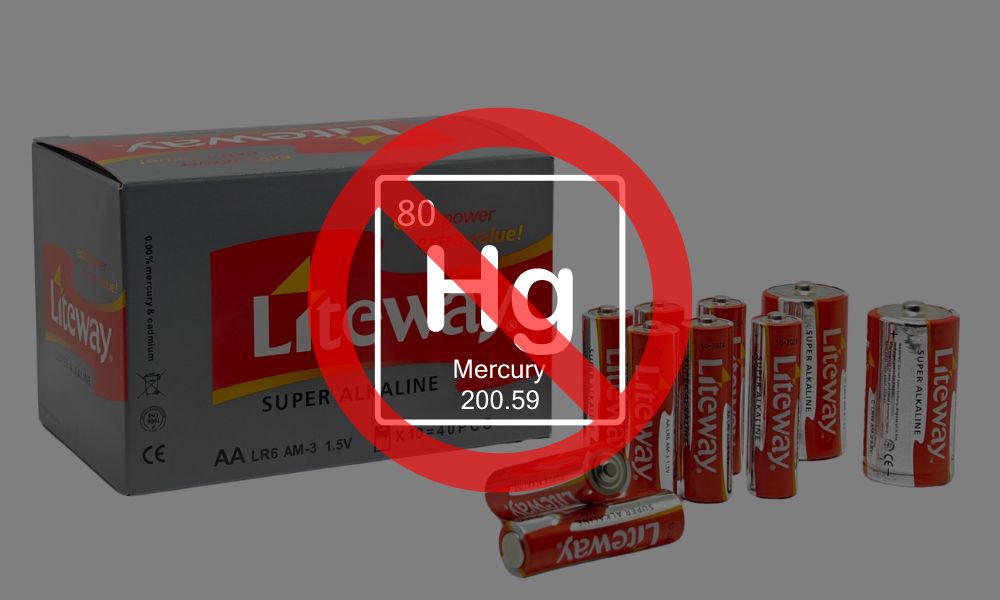
In the past, alkaline batteries usually contained mercury, and even now, many batteries contain mercury. Mercury does bring benefits to batteries in some ways. Still, at the same time, as a potentially risky heavy metal, mercury has strong biological toxicity and can cause harm to the environment and human health.
Now, more and more battery manufacturers are committed to producing mercury-free alkaline batteries. So, how to achieve mercury-free alkaline batteries? This post will give you a detailed answer.
Why do alkaline battery need mercury?
We first need to know why mercury was widely used in alkaline batteries in the past.
Alkaline batteries use manganese dioxide as the positive electrode material, zinc as the negative electrode material, and alkaline electrolyte.
Zinc powder and alkaline electrolyte will inevitably undergo chemical corrosion during contact. This will cause the battery capacity to decrease and reduce the battery life. At the same time, gas will be generated, causing the internal pressure of the battery to increase, electrolyte leakage, and battery expansion and deformation.
In order to avoid the above situation, mercury-containing corrosion inhibitors must be added to the battery to reduce zinc corrosion.
At the same time, mercury-containing corrosion inhibitors can react chemically with zinc on the surface of the copper rod of the current collector to generate Zn-Hg, thereby reducing the contact resistance of the negative electrode and improving the discharge performance of the battery.
In general, mercury has two functions in alkaline batteries: one is to reduce corrosion, and the other is to improve battery performance.
How to achieve mercury-free?
Through the above, we know the dangers of mercury and the functions of mercury. Then the idea of achieving mercury-free is obvious, which is to avoid the use of mercury in alkaline batteries, but at the same time reduce corrosion inside the battery and improve battery performance.
There are several ways to achieve mercury-free:
1. Improve the zinc powder of the negative electrode
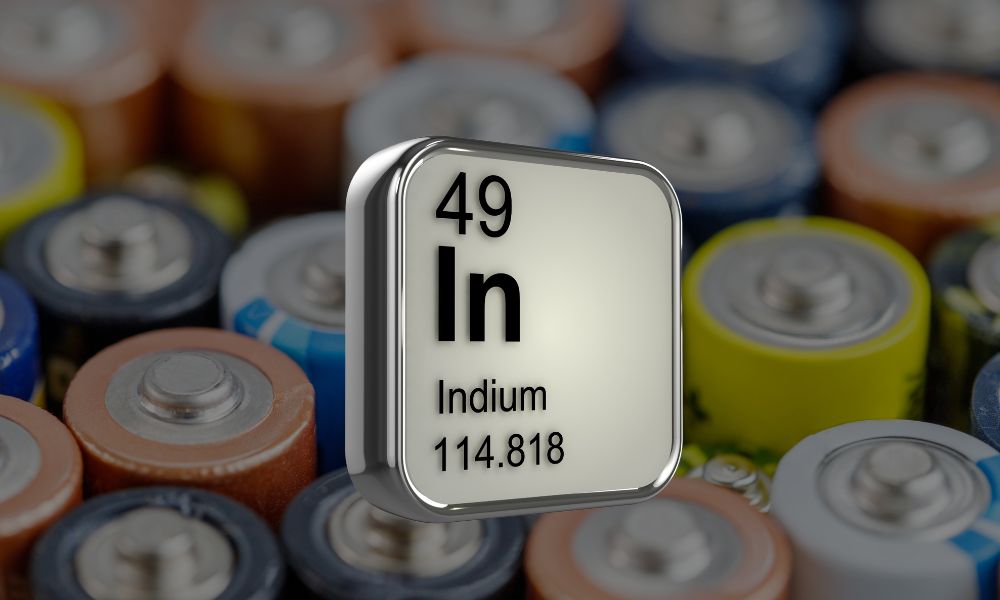
Other substances that can replace mercury, such as indium, can be added to the zinc powder to improve the surface properties of the zinc electrode and increase the strength of the zinc electrode.
After research, it was found that indium oxide has a very good hydrogen suppression effect. In the potassium hydroxide solution, the indium decomposed by indium oxide is adsorbed on the surface of zinc, which can significantly reduce the surface activity of zinc particles and make the zinc powder achieve good corrosion resistance.
2.Treat the surface of the current collector copper rod
The surface condition of the current collector copper rod has a great influence on the performance of mercury-free alkaline batteries.
During the manufacturing process, copper rods may contain impurities such as Fe and Ni, which will be oxidized by air to form an oxide film. If the copper rod is assembled into the battery without treatment, it may cause the battery to fail.
Therefore, the copper rod can be polished, indium plated, etc. to adjust the surface condition of the current collector and ultimately improve battery performance.
3.Add corrosion inhibitor
The corrosion inhibitor needs to effectively inhibit zinc corrosion while not hindering the dissolution of zinc when the battery is working. Corrosion inhibitors can be divided into inorganic corrosion inhibitors and organic corrosion inhibitors.
Inorganic corrosion inhibitors do not affect zinc discharge and have no control over the cathodic reduction of oxygen, but they have temperature requirements and are prone to failure in high temperature environments. In general, it can inhibit the evolution of hydrogen and alleviate the corrosion of zinc.
There are many types of organic corrosion inhibitors, which can be simply divided into two categories: surfactants (hydrogen suppression) and hydrogen elimination additives (hydrogen absorption). Organic corrosion inhibitors can be stably distributed on the surface of zinc in alkaline electrolytes, preventing the dissolution of zinc.
4.Improve cathode materials
The conventional positive electrode material for alkaline batteries is manganese dioxide, but substances added with other conductive materials can also be used to form a composite positive electrode material, thereby improving the conductivity of the positive electrode.
5.Improve diaphragm materials
The separator separates the positive and negative electrodes in the battery. By using better-performing separator materials, it can also reduce battery self-discharge and improve battery life.
In addition to the five mercury-free methods introduced above, there are other methods. In short, the technical means to achieve mercury-free alkaline batteries are now very mature, and mercury-free alkaline batteries have gradually been promoted in the market.
This is not only an advancement in battery technology, but also an important practice in the global environmental protection cause. I believe that in the future, the development of battery technology will definitely move towards a more environmentally friendly, safer, and higher energy density direction.
About the Author
Liteway is a professional manufacturer and supplier of alkaline batteries, carbon-zinc batteries, and lithium batteries based in Ningbo, China.
We have more than 20 years of manufacturing and exporting experience in the battery field, providing battery manufacturing and OEM/ODM services to customers all over the world. We are a co-manufacturer for many battery brands and have been unanimously recognized by our partners during the cooperation process.
Alkaline batteries are one of our battery series. If you want to learn about our Alkaline batteries, please click here.
If you want to cooperate with us and let us manufacture and customize batteries for you, please contact us.